Thematic Group on Gen Z: Leading Generational Renewal in Farming
This Thematic Group enabled you to assess the necessary changes in both policy and practice to foster greater engagement of young people in agriculture and discuss their role in shaping rural areas.

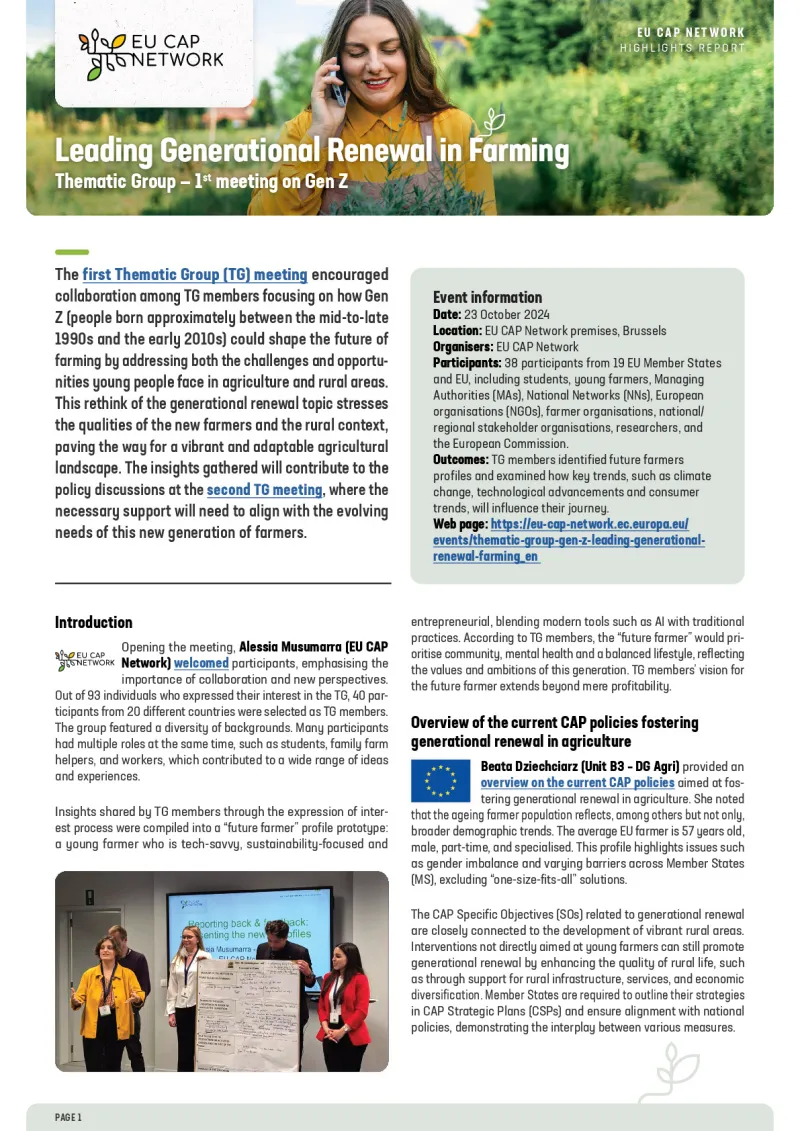
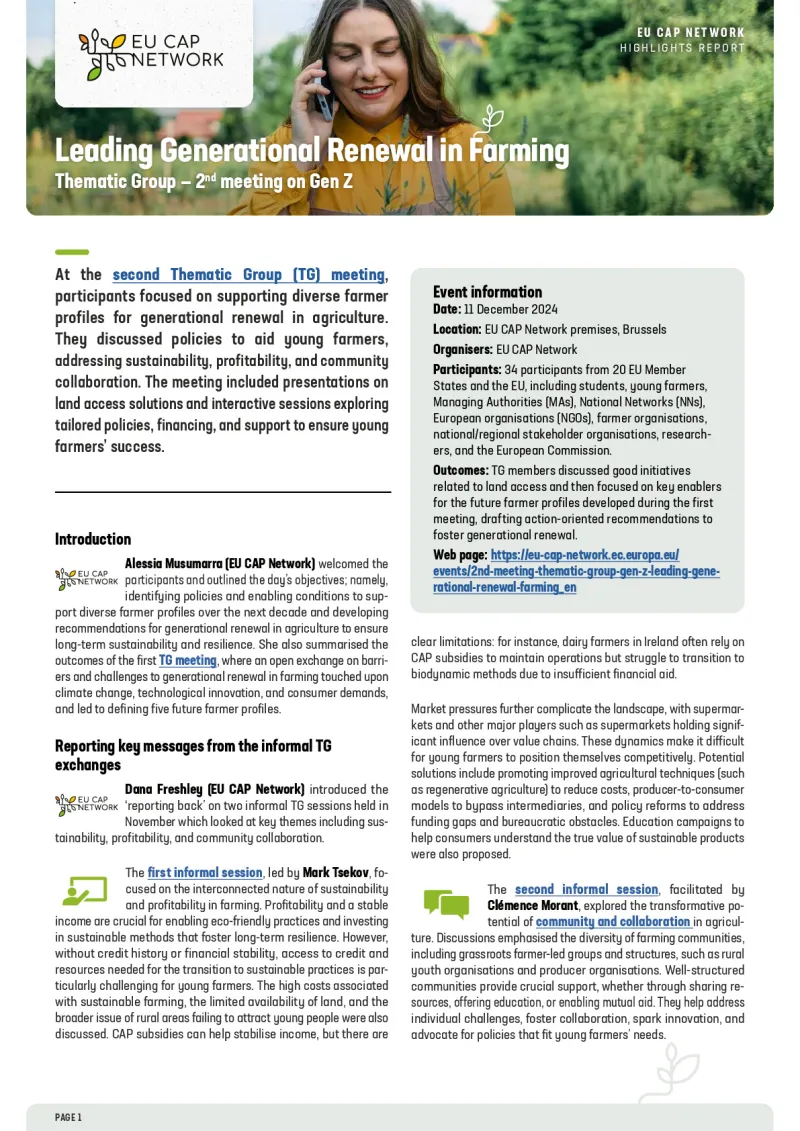
In the evolving landscape of agriculture, young people are crucial in shaping the future of farming and rural areas. Future farmers and rural areas must be deeply integrated, with agricultural activities embedded in local economic and social environments. Generational renewal goes beyond merely reducing the average age of farmers in the EU. It involves understanding the needs and aspirations of young people living in rural areas, who could drive the future of farming and vice versa. It is important to empower the new generation of young farmers to harness the full benefits of technology and innovation for sustainable farming practices in Europe.
Furthermore, it is vital for young people to engage in diverse networks and communities in rural areas, including professional and cultural groups, and connections with consumers, researchers, and business partners. These networks and communities facilitate information exchange, collaboration, and innovation, empowering the next generation of farmers to adapt to new challenges, learn, interact, socialise, and seize new opportunities. Policies that support the creation and management of these networks and communities will be crucial for improving the attractiveness and resilience of rural areas and future farmers.
The CAP 2023-2027 not only facilitates the establishment of young farmers and new entrants, it also supports young entrepreneurs across various economic sectors, enhancing their social inclusion and community engagement. This policy aims to strengthen the socio-economic fabric, making rural areas more attractive for young people to live and work in, thereby investing in rural viability and vitality.
Building on existing groundwork, the TG aimed to explore the key characteristics of future farmers from the perspective of young people. This TG had Generation Z as its main target group, as they are the ones looking towards their future.
Objectives
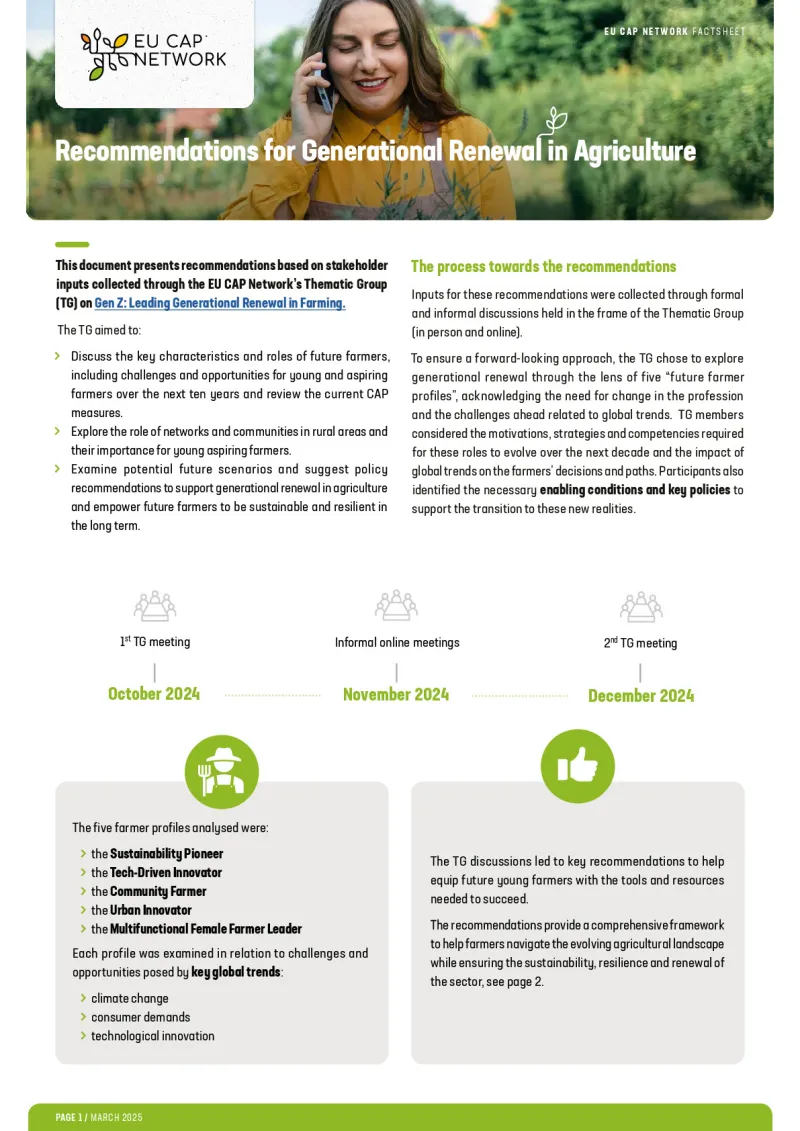
The objectives of this TG were to:
- Discuss the key characteristics and roles of future farmers. This exchange will also consider the identified challenges and opportunities for young and aspiring farmers over the next 10 years, and review the current CAP measures.
- Explore the role of networks and communities in rural areas and their importance for young aspiring farmers.
- Examine potential future scenarios and suggest policy recommendations to support generational renewal in agriculture and to empower future farmers to be sustainable and resilient in the long term.
The meetings were held in English, without interpretation.
If you have any questions, please contact us at thematicgroup2@eucapnetwork.eu.
To follow the work of this Thematic Group, please visit this page regularly, subscribe to our monthly newsletter, and follow us on social media (#GenerationalRenewal).
You can find useful resources about this theme further down in this page and in our Publications section.